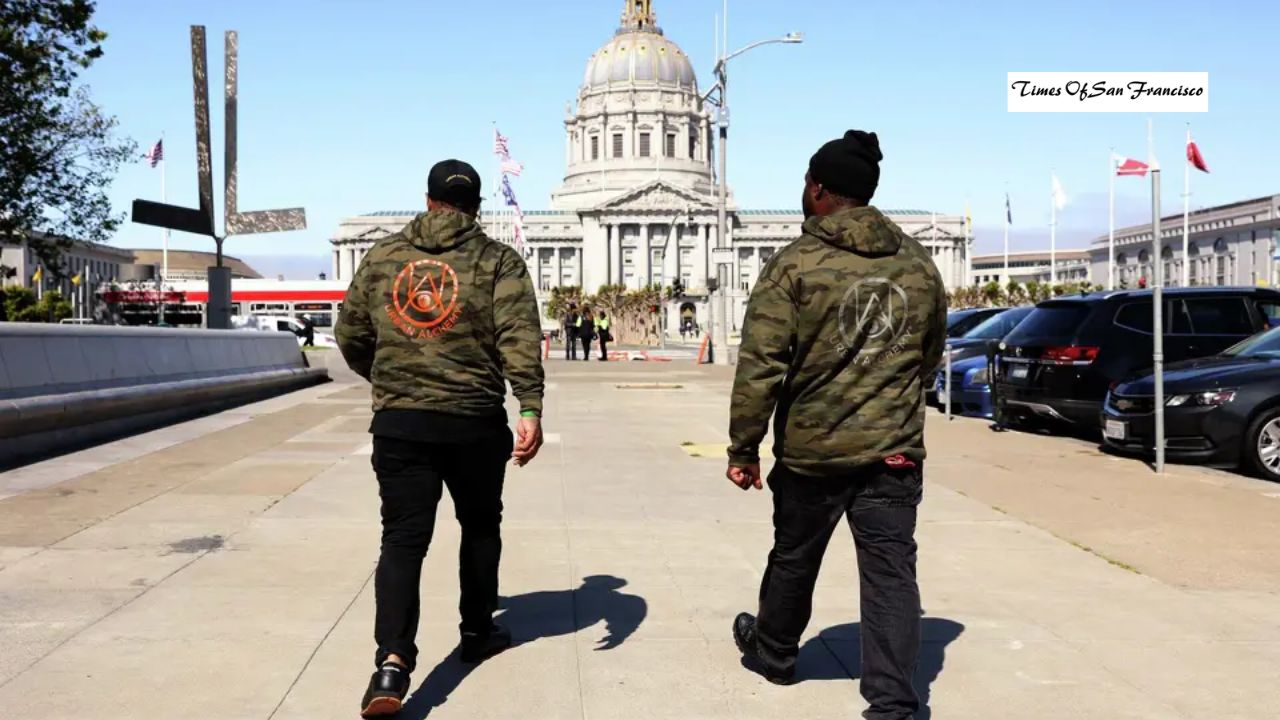
San Francisco is preparing to award millions of dollars to nonprofit groups as the city changes how unarmed street ambassadors are deployed in high-need neighborhoods. The biggest share of the funding is set to go to Urban Alchemy, a well-known nonprofit that works on street safety and outreach.
City Plans Major Shift in Ambassador Strategy
The City of San Francisco plans to distribute up to $34.7 million to Urban Alchemy and several other service providers. This move is part of Mayor Daniel Lurie’s new approach to managing street ambassador teams across the city.

The new plan, led by the San Francisco Department of Emergency Management (DEM), focuses on flexibility. Instead of assigning ambassadors to fixed locations, teams will now move across neighborhoods based on real-time needs.
Mayor Lurie said the updated structure will allow the city to place ambassadors where they are needed most and respond faster to community concerns.
What Street Ambassadors Are Expected to Do
The funding comes from a competitive bidding process launched in October by the San Francisco Human Services Agency (HSA) in partnership with DEM. Five organizations were selected to provide trained ambassador teams for the next 18 months.
Key Responsibilities of Ambassadors
- Discourage open drug use and illegal activity
- Calm tense or dangerous situations without force
- Help keep streets clean by picking up trash
- Support residents, visitors, and businesses

City officials said the goal is to get better results without increasing costs, by expanding coverage areas while keeping staffing levels similar.
Urban Alchemy Receives the Largest Share
Urban Alchemy is expected to receive up to $24.2 million, making it the largest recipient of the new funding. The nonprofit will patrol areas including the Tenderloin, Mid-Market, and South of Market, while also being available to respond to needs in other neighborhoods such as the Excelsior.
Under the new plan, Urban Alchemy ambassadors will expand beyond their current one-block focus on Sixth Street. However, they will no longer staff a parking lot “oasis” at Sixth and Jessie streets.
Praise and Controversy Surround Urban Alchemy

City leaders have praised Urban Alchemy for helping fill gaps caused by San Francisco’s police staffing shortages and for creating jobs, especially for people with past criminal records. The group refers to its workers as unarmed “practitioners.”
However, the organization has also faced criticism. Some ambassadors have been accused of violent incidents, and others have been victims of violence themselves. In September, an Urban Alchemy worker was shot and killed after asking a drug user to move.
The nonprofit has also faced questions about its finances and tracking of employee work. Earlier this year, the city controller’s office flagged issues with record-keeping, which Urban Alchemy later corrected.
A spokesperson for Urban Alchemy said the organization’s finances are strong and that ambassadors receive at least two weeks of classroom and on-the-job training.
Other Organizations Receiving Funding
Several other groups will also receive city funding under the new program:
- Glide Foundation, Heluna Health, and the Tenderloin Community Benefit District will share up to $7 million to patrol areas such as Civic Center, Polk Gulch, Lower Nob Hill, and Tenderloin parks.
- Ahsing Solutions, a for-profit company, will receive up to $3.5 million to continue ambassador services in the Mission District.
Union Pushback and Final Approval
The program faced opposition from the union representing San Francisco Public Works employees. Union leaders argued that the city should invest the money in expanding its own workforce instead of outsourcing services.
Despite the criticism, the Human Services Commission approved the spending. The contracts are expected to be finalized next week. DEM will oversee daily operations, while HSA will manage the financial side of the program.
Conclusion
San Francisco’s revamped street ambassador program marks a major shift toward flexible, citywide deployment of unarmed outreach teams. With Urban Alchemy receiving the largest share of funding, city leaders are betting that mobile ambassador teams can improve safety, reduce street disorder, and support vulnerable communities more effectively. As the program rolls out, its impact will likely remain a major point of public discussion.