The long-running tension between San Francisco’s Mission District and major tech companies is heating up once again. This time, the dispute centers on DoorDash’s plan to test food delivery drones in the Mission — a proposal that has triggered strong opposition from labor unions, public safety officials, and local lawmakers.
Why DoorDash’s Drone Plan Is Facing Resistance
DoorDash wants to expand its San Francisco delivery operations by testing airborne drones from a warehouse at 1960 Folsom Street. While much of the testing would take place indoors, drones would also be flown outside, sparking concern among residents and workers.
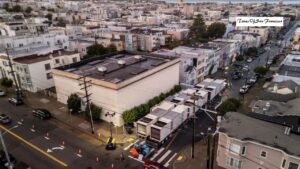
A new piece of legislation could delay the project by up to 18 months. The proposal, introduced by Supervisor Jackie Fielder, would require companies to obtain a special permit for so-called “laboratory uses” in industrial zones across the Mission District, Dogpatch, and Potrero Hill.
What the New Legislation Would Do
The legislation would pause approvals for certain tech-related activities in industrial areas while the city studies how these spaces are being used. According to Fielder, the goal is to protect:
- Blue-collar and union jobs
- Industrial businesses such as auto shops and warehouses
- Immigrant worker employment opportunities
Fielder emphasized that the proposal is not anti-tech but calls for closer review as automation and artificial intelligence move into spaces traditionally used for manual labor.
Labor Unions and Safety Officials Raise Alarms

Labor groups like Teamsters Local 665 argue that drone testing could eventually replace well-paying delivery jobs. They also question whether outdoor drone flights should qualify as “laboratory use” under current zoning laws.
Public safety officials share similar concerns. Firefighters Local 798 warned that drones could pose serious risks in dense neighborhoods filled with power lines, wooden buildings, and crowded streets.
Key Safety and Privacy Concerns
- Drones weighing “as much as a bowling ball” falling from the sky
- High winds knocking drones off course
- Potential fires caused by crashes
- Privacy issues due to onboard cameras
Union leaders argue that the Mission District should not become a testing ground for experimental technology.
Tech Industry Pushback
The proposed restrictions have drawn criticism from the tech sector. The San Francisco Chamber of Commerce warned that the legislation could unintentionally harm important industries, including:
- Medical and cancer research
- Vaccine development
- Climate and sustainable agriculture technology
Y Combinator CEO Garry Tan publicly criticized the proposal, urging residents to contact their supervisors to protect research and development activities in the city.
A Familiar Battle in the Mission District
This conflict echoes past struggles in the Mission during previous tech booms, dating back to the dot-com era of the late 1990s. Despite a major rezoning effort in 2009 aimed at protecting industrial and arts spaces, a 2016 study found that the area lost nearly one million square feet of such space in just five years.
After slowing during the pandemic, tech expansion is once again accelerating — fueled by artificial intelligence — and putting pressure on what remains of the Mission’s industrial core.
Where DoorDash Stands
DoorDash has stated that most testing would occur indoors and follow all Federal Aviation Administration and state privacy rules. The company said:
- No more than two drones would operate at once
- Each flight would last under 30 minutes
- Testing would occur during normal business hours
Despite these assurances, critics argue that once testing begins, full-scale drone delivery may not be far behind.
Conclusion
The debate over DoorDash’s drone testing highlights a larger question facing San Francisco: How can the city balance innovation with worker protection and neighborhood safety? As AI and automation continue to expand, the Mission District has once again become a frontline in the struggle between rapid tech growth and preserving blue-collar jobs. The outcome of this legislation could shape how — and where — future technology is allowed to take flight in the city.