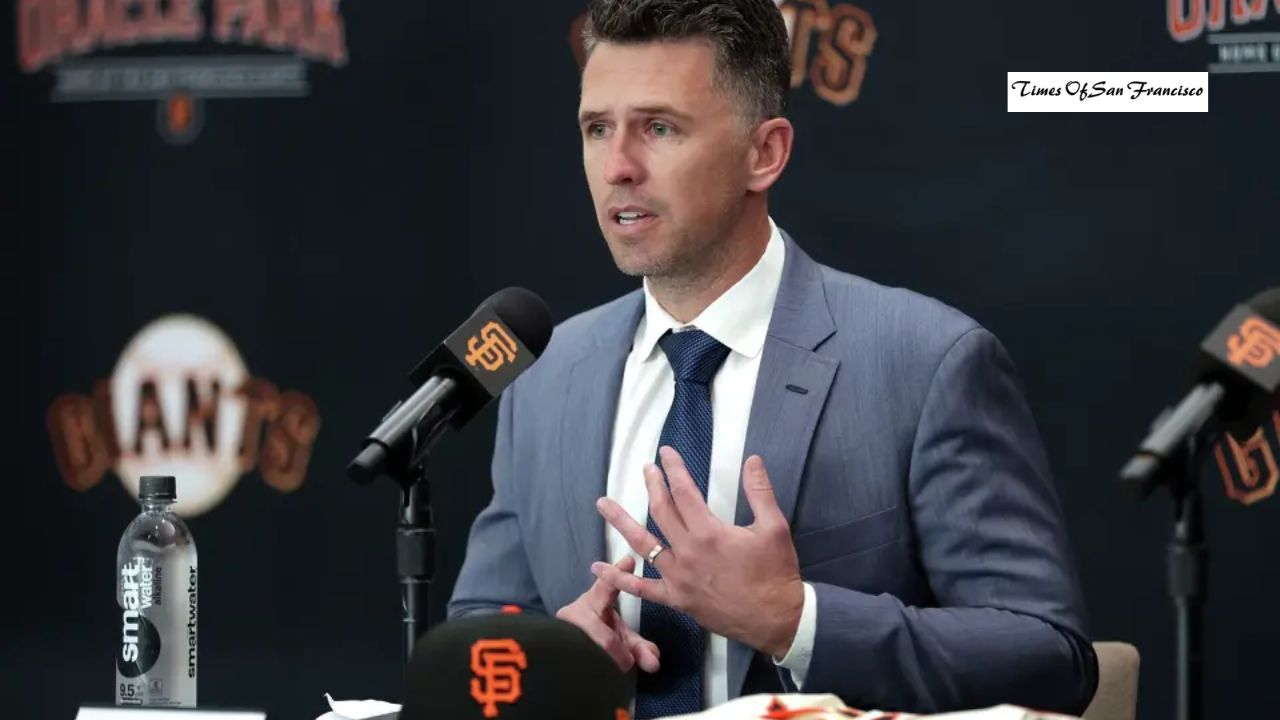
After one full year as the San Francisco Giants’ top baseball decision-maker, Buster Posey is beginning to earn a reputation across Major League Baseball. Formerly one of the most respected players of his generation, Posey is now being closely watched by rival executives and player agents to see how his instincts and leadership translate from the field to the front office.
Buster Posey’s Transition From Star Player to Team Executive
Buster Posey is entering his second offseason as president of baseball operations for the Giants. During his playing career, Posey made an immediate impact, helping lead the franchise to three World Series titles starting in 2010. As an executive, however, his influence will take time to fully measure.

Still, people around the league who have worked with Posey — or negotiated with him — are already forming opinions about his leadership style, decision-making, and overall vision for the team.
Baseball Insiders Say Posey Is Decisive and Competitive
After speaking with multiple rival executives and agents, one theme comes up again and again: Posey wants to win, and he makes decisions quickly.
In an era where many front offices rely heavily on data and long deliberations, Posey stands out for trusting his instincts as a former player. Several agents compared him to Texas Rangers executive Chris Young, another former player who relies on experience as much as analytics.
Agent Scott Boras Weighs In

Super-agent Scott Boras, whose clients include Giants stars Matt Chapman and Jung Hoo Lee, said Posey has strong knowledge of the league and understands how talent evolves over time.
Boras described Posey as someone who blends his playing experience with executive responsibilities, noting that this balance is one of the hardest parts of running a baseball organization.
Bold Moves Define Posey’s First Year
Although the current offseason has been relatively quiet, Posey made headlines during the 2025 season with several bold and risky decisions.
The Rafael Devers Trade
Posey pulled off one of the biggest trades of the year by acquiring All-Star slugger Rafael Devers from the Boston Red Sox. The move brought a powerful left-handed bat to San Francisco and secured a cornerstone player for years to come.
Many around the league see this trade as Posey’s official arrival as a serious front-office executive.
Hiring Tony Vitello as Manager
Another surprising decision was hiring college coach Tony Vitello as Giants manager, despite his lack of professional baseball managing experience.
Executives described the hire as a bold and unconventional move, signaling that Posey is willing to think differently rather than follow traditional MLB paths.
Doing Things Differently From Rival Teams
One National League executive noted that competing with teams like the Dodgers and Padres requires a new approach.
Instead of trying to match those teams’ massive budgets and analytical depth, Posey appears focused on building a unique identity that blends tradition with innovation.
This willingness to take risks has earned respect across the league, even from rival organizations.
Roster Decisions and Tough Calls
Posey has also shown a willingness to make difficult decisions, even when they come at a financial cost.
Managerial Changes
Posey exercised manager Bob Melvin’s contract option, only to fire him at season’s end. The move was seen as a short-term effort to stabilize the team, followed by a long-term reset.
As a result, the Giants are paying nearly $10 million combined for past and present managers, including buying out Vitello’s college contract.
Trade Deadline Decisions
At the trade deadline, Posey dealt Tyler Rogers, Mike Yastrzemski, and closer Camilo Doval for a strong package of prospects. While the move weakened the bullpen and hurt a late playoff push, it strengthened the organization’s future.
Balancing Analytics and Old-School Baseball
The Giants’ previous front office leaned heavily on analytics, which frustrated many fans during the Farhan Zaidi era. Replacing Zaidi with Posey was widely seen as a return to a more traditional baseball mindset.
However, insiders agree that Posey has not abandoned analytics completely. Like every modern team, the Giants still use data models for player evaluation and game preparation — just not as aggressively as some rivals.
Big Question: Will Ownership Spend?
The biggest question surrounding Posey’s future success is whether Giants ownership will support him financially.
With owner Greg Johnson reportedly cautious about long-term contracts, some agents wonder if Posey will be given enough freedom to add elite pitching and key players needed to compete in 2026.
Unlike many executives, Posey is also a part-owner of the team, giving him both influence and personal financial stakes in the outcome.
The Giants’ Competitive Window Is Now
The current roster features several All-Star players locked into long-term deals, including Rafael Devers, Matt Chapman, Willy Adames, and Logan Webb.
This creates urgency. Baseball insiders agree the Giants must add impact talent soon if they want to fully capitalize on this roster’s prime years.
Conclusion
After one year in charge, Buster Posey is already leaving a strong impression across Major League Baseball. Insiders describe him as decisive, competitive, and unafraid to take risks. While it’s still early in his executive career, Posey’s bold moves suggest he is determined to return the San Francisco Giants to championship contention — and he won’t settle for mediocrity.