Nikki, a mom from the East Bay, received a call on her son’s 14th birthday that changed everything. His pediatrician from Sutter Health informed her that, starting December, the hospital system would no longer provide gender-affirming care — including puberty blockers and hormone therapy — for anyone under 19.
Sutter, along with Kaiser Permanente and Stanford, had already stopped gender-affirming surgeries for minors. But this new move goes further, removing access to essential medical treatments many transgender children depend on.

“These medications are a basic need for my kid,” Nikki said. She asked not to share her last name to protect her son’s privacy.
Why Families Say the Decision Feels Devastating
Nikki said the news felt “crushing,” and many parents believe this pressure is intentional. Families say the sudden decision came without proper communication or explanation from Sutter’s administration.
Families Left Without Clear Answers
Instead of official notices, parents say they heard the updates only through their pediatricians, who also lacked details. This lack of transparency has made families even more anxious about their children’s future care.
Protests Erupt Outside Sutter Headquarters

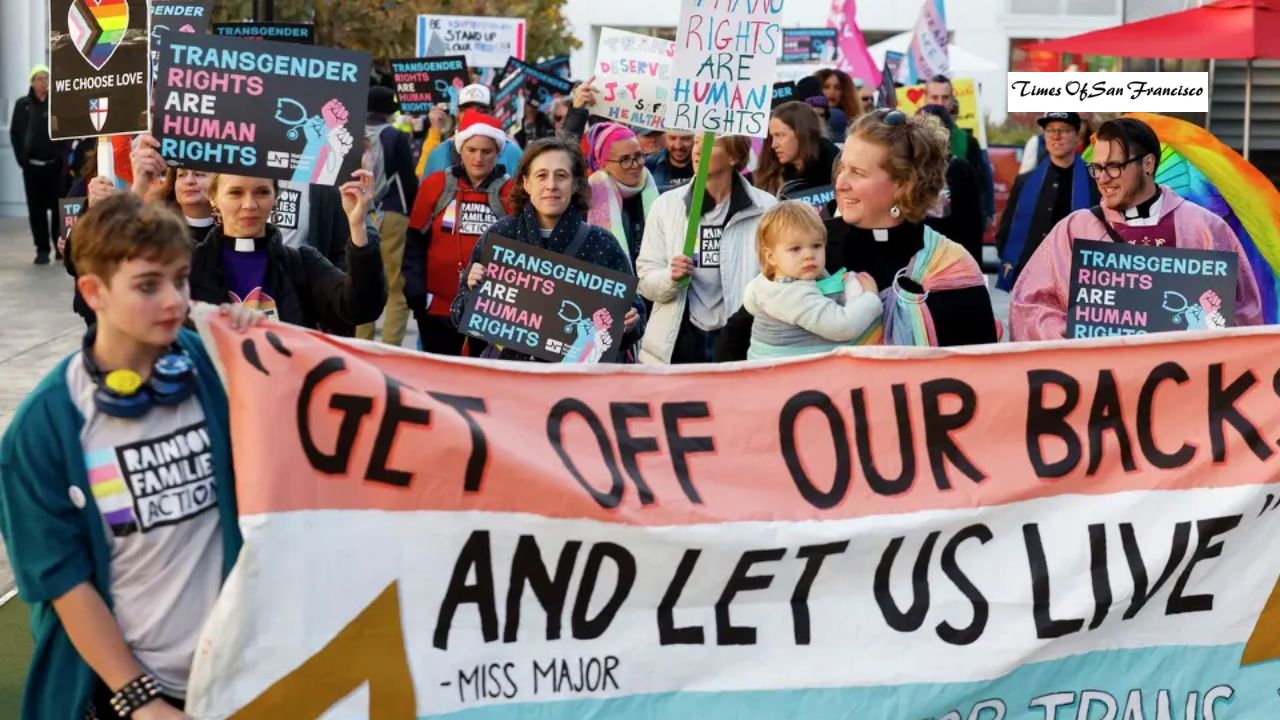
On Monday, around 150 members of Rainbow Families Action — a group of Bay Area families with transgender children — marched from Bay Street to Sutter’s corporate offices in Emeryville.
They held signs, chanted, and demanded clear information. Families say Sutter still has not directly explained why the decision was made or how it will be carried out.
Sutter’s Response Remains Limited
Sutter released a statement on Nov. 25, saying it is adjusting its policies to comply with recent federal actions. The Trump administration has warned hospitals that they could lose federal funding if they provide gender-affirming care to minors.

After the protest, Sutter slightly updated its statement, saying doctors are now working directly with families to create treatment plans during this “changing” period.
Some families in the Bay Area say they have been told their care can continue for now. But families in Sacramento say they were told services will still end this month.
Transgender Kids and Parents Speak Out
At the protest, both kids and parents said they feel targeted and used as “political pawns.” They argued that health care decisions should remain between families and their doctors—not politicians.
13-year-old Sebastian Rose said he felt proud to lead the march. “Why does anyone care as long as we’re happy and comfortable in our own bodies?” he asked.
Lawmakers Also Raise Concerns
State Sen. Scott Wiener expressed disappointment with Sutter’s decision, saying that blocking access to gender care could lead to increased depression, addiction, and suicide among transgender youth. He stressed that medical experts overwhelmingly support parental and physician involvement in these decisions.
Parents Say Their Trust Has Been Broken
Julie, an East Bay mother of a 10-year-old transgender boy, said the news felt like a betrayal. “California felt like a safe place for our children,” she said. “But now it feels like that safety is slipping away.”
She blamed both the Trump administration’s pressure and Sutter’s choice to comply. “The first rule of medicine is ‘do no harm.’ But this decision is harming families like ours,” Julie said.
Many parents say even if care continues temporarily, they are worried it could stop at any time, leaving them scrambling to find life-saving services elsewhere.
Conclusion
The sudden shift in Sutter Health’s policy has created fear and uncertainty among families with transgender children. As protests grow and parents continue demanding answers, many hope that Sutter will either reverse its decision or at least provide clear guidance. For now, families remain on edge, unsure of what the future holds for their children’s essential medical care.